One of the most common questions vehicle owners have is simply: how often does my car actually need to be serviced? The honest answer is that it depends — on the vehicle's make and model, how it's used, how many miles it covers in a year, and whether it has a fixed or variable service interval system. This guide breaks it down in practical terms.
The baseline: annual or 12,000 miles
For most petrol and diesel vehicles in the UK, the traditional guidance is to service once a year or every 12,000 miles — whichever comes sooner. If you cover significantly fewer than 12,000 miles in a year, time is often the more relevant factor, since engine oil degrades over time regardless of use.
This 12-month or 12,000-mile guideline is a reasonable starting point for most drivers. It accounts for typical driving patterns, UK climate conditions, and the general wear rates of commonly used components.
Fixed versus variable service intervals
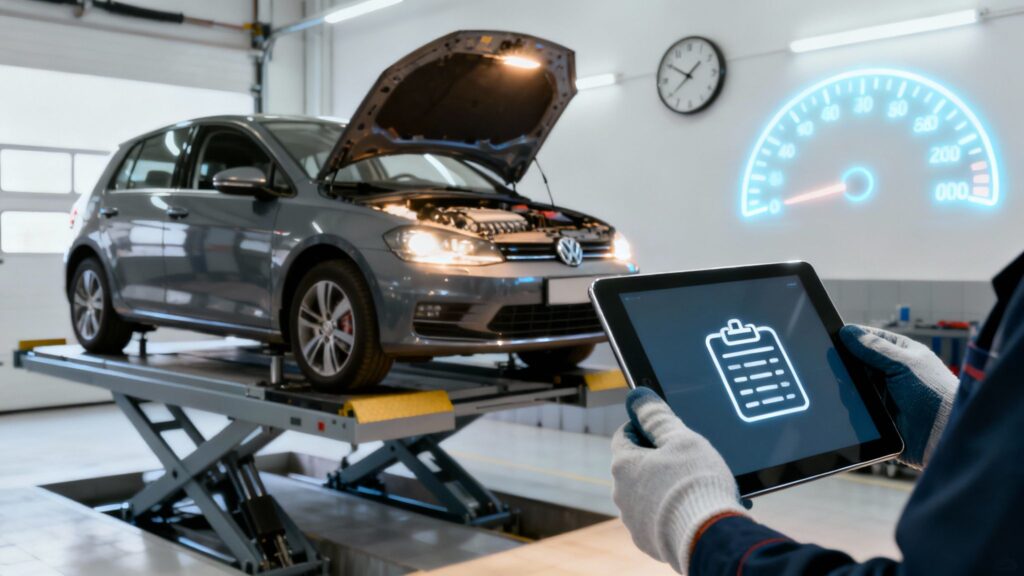
Many modern vehicles — particularly those from German manufacturers and several Japanese brands — have what's known as a variable or flexible service interval system. Rather than prescribing a fixed mileage, the car's onboard computer monitors oil condition, engine load, driving style, and other factors to calculate when a service is actually needed.
These systems can extend service intervals to 18,000 miles or more under light driving conditions. On the one hand, this reduces the frequency of servicing; on the other, it means you're sometimes running the same oil for considerably longer than traditional intervals would suggest.
If your vehicle has a variable interval system, it will display a service reminder when the time comes. It's generally advisable to follow this, though if your driving is particularly heavy — lots of towing, frequent short journeys, or sustained motorway driving — it may be worth speaking to your workshop about whether a shorter interval makes sense.
What's the difference between an interim and a full service?
If you cover higher annual mileage — say, over 20,000 miles per year — you might want to consider an interim service between full services. Here's what each typically involves:
Interim Service
Typically recommended every 6 months or 6,000 miles. Covers the essential items: oil and filter change, tyre inspection, lights check, fluid top-ups, and a visual safety inspection. It's a shorter check that keeps key components in good condition between full services.
Full Service
Typically done annually. Includes everything in an interim service, plus a comprehensive inspection of brakes, suspension components, steering, exhaust system, spark plugs (on petrol engines), air and fuel filters, and a more detailed diagnostic check. Stampable in the service book.
For drivers covering 12,000 miles or fewer per year, a single full service annually is usually sufficient. For higher-mileage drivers, an interim at the halfway point helps keep wear rates in check and means small issues are caught earlier.
How driving habits affect service frequency
Mileage alone doesn't tell the full story. The nature of your driving matters just as much as the total distance covered.
Short journeys
Short trips — particularly those under five miles — are harder on engines than longer runs. The engine doesn't fully reach operating temperature, which means condensation and unburned fuel can accumulate in the oil. This accelerates degradation and can lead to a build-up of sludge in the engine over time. If most of your driving consists of short urban journeys, it's worth considering more frequent oil changes than the standard interval suggests.
Motorway or long-distance driving
Sustained motorway driving at steady speeds is relatively easy on engines. Oil temperatures remain stable, components operate within normal parameters, and there's less stop-start wear on the clutch and brakes. High-mileage motorway drivers often find their vehicles are mechanically in good condition relative to their age because of this.
Towing and heavy loads
If you regularly tow a trailer, caravan, or carry heavy loads, this places additional strain on the engine, transmission, brakes, and suspension. In these cases, more frequent servicing — particularly attention to brake condition and transmission fluid — makes sense. Check your vehicle's handbook for towing-specific service guidance, as some manufacturers explicitly recommend shorter intervals under these conditions.
Does vehicle age change anything?
Older vehicles often benefit from slightly more frequent attention, not because they're inherently less reliable, but because ageing seals, older hoses, and higher-mileage components have less tolerance for deferred maintenance. An older car with a full service history running on fresh oil and properly tensioned belts can be very reliable. The same car with service intervals consistently stretched can develop compounding issues.
If you've bought a used vehicle without a full service history, it's generally worth booking a service promptly to establish a baseline and check whether anything has been neglected. This gives you a clear starting point for future maintenance.
The MOT is not the same as a service
This is worth stating clearly because the two are often confused. An MOT is a statutory annual roadworthiness test that checks whether a vehicle meets the minimum legal safety standard at the time of testing. It does not include an oil change, fluid top-ups, or the kind of proactive inspection a service involves.
A vehicle can pass its MOT perfectly well and still have engine oil that's overdue for a change, worn brake pads approaching their limit, or a coolant level that needs attention. The MOT checks safety — the service maintains condition. Both are necessary, but they serve different purposes.
Timing your service and MOT
Many drivers find it convenient to have their service and MOT done at the same time, which streamlines the process and means only one day without the vehicle. If your service and MOT anniversaries don't currently coincide, it's worth adjusting one to align with the other when the opportunity arises.
If your vehicle does fail its MOT on a repair-related item — such as worn brake pads or a bulb failure — having the service done at the same time means the labour for related work is sometimes more efficient, as the vehicle is already being inspected comprehensively.
Not sure when your car is next due a service?
If you've lost track of your service schedule or have recently bought a used vehicle, we can carry out a health check and let you know where things stand. No obligation, no jargon.
Get in TouchA quick reference guide
To summarise the key points in straightforward terms:
- Most vehicles need a full service every 12 months or 12,000 miles, whichever comes first.
- Vehicles with variable service intervals should follow the onboard reminder, but check the handbook for specifics.
- High-mileage drivers (20,000+ miles/year) benefit from an interim service every six months.
- Drivers who mostly do short trips may benefit from more frequent oil changes.
- An MOT is not a substitute for a service — both are needed.
- If your service history has gaps, a catch-up service gives you a solid baseline to work from.
Regular servicing isn't about spending money for its own sake. It's about maintaining a clear picture of your vehicle's condition, catching developing issues before they escalate, and giving your car the best chance of lasting reliably for years to come.